The Benefits of Supplemental and Corrective Foliar Feeding for Your Cannabis Plants
What Is Foliar Feeding and Why Does It Matter?
Foliar feeding delivers nutrients directly to plant tissue through the leaves, bypassing the root system entirely. This allows for rapid nutrient uptake — often within hours — making it one of the fastest tools available for correcting deficiencies or providing a targeted nutritional boost during high-demand growth stages.
Foliar feeding should complement, not replace, a comprehensive fertigation program. It is most effective as a supplemental or corrective tool used alongside a well-managed root-zone nutrition program.
Supplemental vs. Corrective Foliar Feeding
Supplemental foliar feeding provides additional nutrients during periods of high demand or stress — such as rapid vegetative growth, the transition to bloom, or environmental stress events (heat, drought, light intensity changes). It gives plants an immediate nutritional boost when root-zone uptake may be limiting.
Corrective foliar feeding addresses visible nutrient deficiencies or imbalances — yellowing leaves, interveinal chlorosis, tip burn, or stunted growth. By applying a targeted nutrient solution directly to the foliage, you can rapidly correct the deficiency while the root-zone program is adjusted.
When to Use Foliar Feeding
- Visible deficiency symptoms — Yellowing, chlorosis, or stunted growth that needs faster correction than root feeding allows
- High-stress periods — Extreme temperature swings, transplant stress, or rapid growth spurts
- Bloom transition — Supplemental P and K during the first weeks of flower to support bud initiation
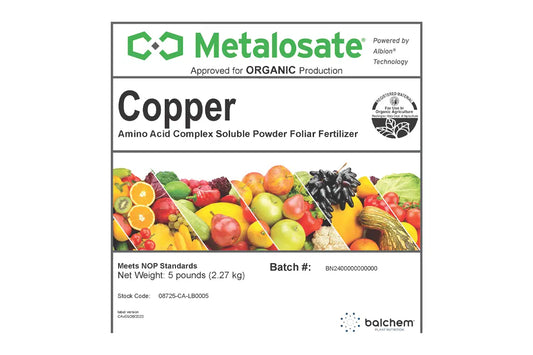
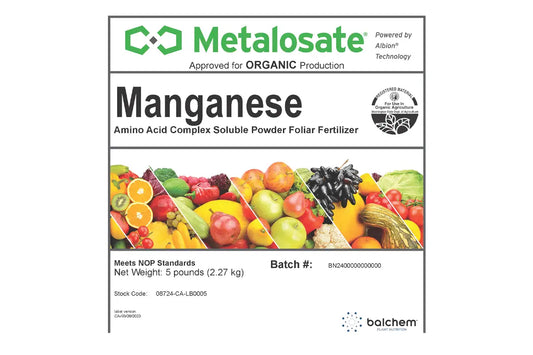
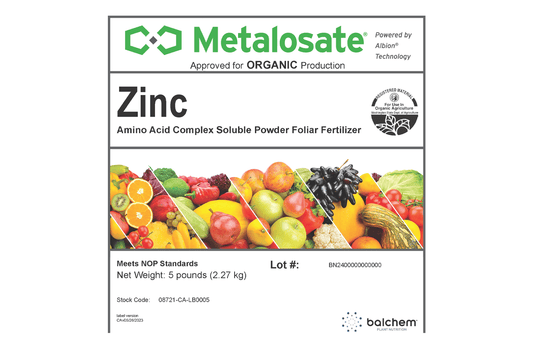
- Micronutrient correction — Iron, zinc, manganese, and boron deficiencies respond well to foliar application
- Root zone issues — When root health or pH lockout is limiting nutrient uptake at the root zone
Choosing the Right Nutrients for Foliar Application
Not all fertilizers are suitable for foliar use. Key criteria:
- Fully water-soluble — Any undissolved particles will clog sprayers and cause uneven coverage
- Low salt index — High-salt formulas can cause leaf burn, especially at higher concentrations or in high-light environments
- Stage-appropriate N-P-K — Match the formula to your crop stage; high-P/K for bloom, micronutrient chelates for deficiency correction
- Point of deliquescence — Consider how the fertilizer behaves as the spray solution dries on the leaf; some salts reabsorb moisture and continue to be taken up, others form a crust
Browse our fertilizer materials suited for foliar feeding, and see our detailed guide: Foliar Fertilizing Cannabis Plants.
How to Apply Foliar Sprays Correctly
- Timing — Apply during lights-off or low-light periods (early morning or late afternoon for outdoor/greenhouse). Dim lights and reduce fan speed for indoor grows. Avoid the hottest part of the day to prevent evaporation and leaf burn.
- Use a surfactant — Always include a non-ionic surfactant such as Capsil or non-ionic surfactant. Surfactants reduce surface tension, causing the spray to spread flat on the leaf surface rather than bead up and run off — maximizing coverage and foliar uptake.
- Concentration — Research does not support the common belief that foliar solutions should be more dilute than root-applied solutions. Higher concentrations are often required for foliar sprays to have a measurable effect on plant health. Follow label rates and adjust based on plant response.
- Coverage — Use a fine mist sprayer and cover both upper and lower leaf surfaces thoroughly. Spray from a distance to avoid excessive moisture pooling.
- Clean leaves first — Remove dust and debris from leaf surfaces before spraying to maximize adhesion and absorption.
- Avoid humid/rainy conditions — High ambient humidity slows drying and increases disease risk (botrytis, powdery mildew).
- Monitor response — Observe plants 24–48 hours after application for improvement or adverse reactions. Adjust concentration or frequency as needed.
Common Mistakes to Avoid
- Using the wrong nutrients — Not all fertilizers are formulated for foliar use; always verify solubility and suitability
- Skipping the surfactant — Without a surfactant, spray solution beads up and runs off, dramatically reducing uptake
- Spraying under high lights or heat — Causes rapid evaporation and potential leaf burn from salt concentration
- Dirty leaves — Dust and debris block nutrient absorption; clean leaves before spraying
- Replacing fertigation with foliar — Foliar feeding is a supplement, not a substitute for a complete root-zone nutrition program
Cost Savings with Custom Foliar Formulations
Building your own foliar nutrient solutions from high-purity raw inputs — chelated micronutrients, water-soluble calcium, magnesium sulfate — can significantly reduce cost per application compared to pre-mixed foliar products. Purchasing inputs in bulk further improves economics. The key is matching the formulation precisely to your crop’s deficiency or supplemental need rather than applying a generic formula.
For more guidance, see our Brief Guide to Cannabis Fertigation and Foliar Fertilizer Selection.