Why Switching from HPS to LED Increases Water Use Efficiency — And What It Means for Your EC
The shift from high-pressure sodium (HPS) to LED lighting in indoor and greenhouse production is well understood in terms of energy savings and spectral control. What is less commonly discussed — and critically important for precision nutrition management — is the significant increase in water use efficiency (WUE) that accompanies the transition to LED. Understanding why this happens, and how to adjust your hydroponic EC program accordingly, is essential to getting the most out of your LED investment.
The Hidden Variable: Infrared Radiation and Leaf Temperature
HPS lamps emit a broad spectrum of radiation, including a substantial proportion of infrared (IR) and near-infrared wavelengths that are not photosynthetically active but are highly effective at heating leaf tissue. This radiant heat load directly elevates leaf temperature above air temperature — often by 2–5°C or more — which has profound consequences for transpiration.
Transpiration rate is driven primarily by the vapor pressure difference between the leaf's internal air spaces (saturated at leaf temperature) and the surrounding air. Because the saturation vapor pressure of air increases exponentially with temperature, even a small increase in leaf temperature dramatically increases the evaporative driving force. Under HPS lighting, the IR-driven leaf temperature elevation effectively creates a microclimate at the leaf surface that is significantly drier than the bulk air — regardless of what your room VPD sensor reads.
LED fixtures, by contrast, emit virtually no infrared radiation. The photons they produce are concentrated in photosynthetically active wavelengths (400–700 nm), with minimal radiant heat load on the leaf surface. The result is that leaf temperature under LED lighting closely tracks air temperature, and the effective VPD experienced by the leaf is much closer to the measured room VPD.
The WUE Equation Under HPS vs. LED
Water use efficiency is fundamentally the ratio of carbon fixed through photosynthesis to water lost through transpiration. Both processes are mediated by stomatal aperture — open stomata allow CO₂ in and water vapor out simultaneously.
Under HPS lighting at equivalent photosynthetic photon flux density (PPFD):
- Leaf temperature is elevated by IR radiation
- Effective leaf-to-air VPD is higher than measured room VPD
- Transpiration rate is elevated
- Water uptake per unit of photosynthesis is higher
- WUE is relatively lower
Under LED lighting at equivalent PPFD:
- Leaf temperature closely matches air temperature
- Effective leaf-to-air VPD matches measured room VPD
- Transpiration rate is lower for the same photosynthetic output
- Water uptake per unit of photosynthesis is lower
- WUE is significantly higher
Research comparing HPS and LED at matched PPFD levels consistently shows transpiration reductions of 15–30% under LED, with equivalent or superior photosynthetic rates — particularly when LED spectra are optimized for the crop. This is a substantial and often underappreciated shift in plant physiology that has direct implications for how you manage your nutrient solution.
Natural Sunlight vs. Indoor LED: A Critical Comparison at High Light Intensity
Understanding the LED advantage becomes even clearer when you compare high-intensity indoor LED production against natural sunlight — the benchmark against which all artificial lighting is ultimately measured.
At peak summer irradiance, outdoor sunlight delivers a full-spectrum radiation load that includes:
- ~43% photosynthetically active radiation (PAR, 400–700 nm)
- ~52% near-infrared and infrared radiation (700–3000 nm)
- ~5% ultraviolet (UV, 280–400 nm)
This means that for every photon driving photosynthesis outdoors, the plant is simultaneously absorbing roughly equal energy as non-photosynthetic heat load. On a clear summer day at peak irradiance (1000–1200 μmol/m²/s PPFD), leaf temperatures in field crops routinely exceed air temperature by 3–8°C, and transpiration rates are correspondingly high. Outdoor crops at high light intensity are operating under inherently low WUE conditions — they compensate through deep root systems, large water reserves in the soil, and stomatal regulation adapted to variable field conditions.
Indoor LED production at equivalent or higher PPFD (800–1500 μmol/m²/s is now achievable with modern high-output fixtures) delivers that photosynthetic energy load with a fundamentally different thermal profile:
| Parameter | Outdoor Sunlight (Peak) | HPS Indoor | LED Indoor |
|---|---|---|---|
| PPFD (μmol/m²/s) | 1000–1200 | 600–1000 | 800–1500+ |
| IR radiation load | Very high | High | Minimal |
| Leaf temp above air temp | 3–8°C | 2–5°C | 0–1°C |
| Effective VPD at leaf | Much higher than measured | Higher than measured | Matches measured |
| Transpiration rate | Very high | High | Moderate |
| WUE | Low | Low–moderate | High |
| CO₂ enrichment possible | No (open system) | Yes | Yes |
| VPD control possible | No | Partial | Full |
The key insight from this comparison is that indoor LED production at high PPFD is not simply a simulation of outdoor sunlight — it is a fundamentally superior growing environment from a WUE perspective. A crop grown under 1000 μmol/m²/s LED with CO₂ enrichment at 1000 ppm and controlled VPD of 1.0 kPa will achieve dramatically higher WUE than the same crop grown outdoors at the same PPFD under full-spectrum sunlight, because the indoor environment eliminates the two largest drivers of unnecessary water loss: infrared heat load and uncontrolled atmospheric humidity.
This is why well-managed indoor LED operations consistently report water consumption per kilogram of yield that is 5–10x lower than field production of equivalent crops — not because the plants are photosynthesizing less, but because they are transpiring far less water to achieve the same or greater photosynthetic output.
The CO₂ and VPD Interaction
The WUE advantage of LED is further amplified when combined with CO₂ enrichment and controlled VPD — two practices that are increasingly standard in high-performance indoor production.
Elevated CO₂ (800–1200 ppm) allows plants to partially close stomata while maintaining or increasing photosynthetic rate. This reduces transpiration per unit of carbon fixed, improving WUE independently of the lighting system. Under LED, where leaf temperature is already lower and transpiration is already reduced, the combined effect of elevated CO₂ and LED lighting can produce WUE values 40–60% higher than HPS at ambient CO₂ — a dramatic shift in how the plant interacts with its root zone environment.
Controlled VPD (typically 0.8–1.2 kPa during the light period) further moderates transpiration. Because LED lighting does not artificially inflate leaf temperature, the VPD your sensors measure is the VPD your plants actually experience — making VPD control far more precise and effective under LED than under HPS, where sensor readings systematically underestimate the true evaporative demand at the leaf surface.
What Higher WUE Means for EC Management
This is where the practical nutrition implications become critical. In a high-WUE environment — LED lighting, elevated CO₂, controlled VPD — plants are transpiring significantly less water per unit of photosynthesis. This has two important consequences for EC management:
1. Nutrient Delivery via the Transpiration Stream Is Reduced
Many nutrients — particularly calcium and magnesium — are delivered to shoot tissue primarily through the transpiration stream (xylem mass flow). When transpiration rate drops under LED, the volume of nutrient solution moving through the plant per hour decreases. If EC is not adjusted upward to compensate, the concentration gradient driving calcium and magnesium uptake may be insufficient, increasing the risk of:
- Tip burn in lettuce and leafy greens
- Blossom end rot in tomato and pepper
- Interveinal chlorosis from magnesium deficiency
- Reduced cell wall integrity and increased susceptibility to disease
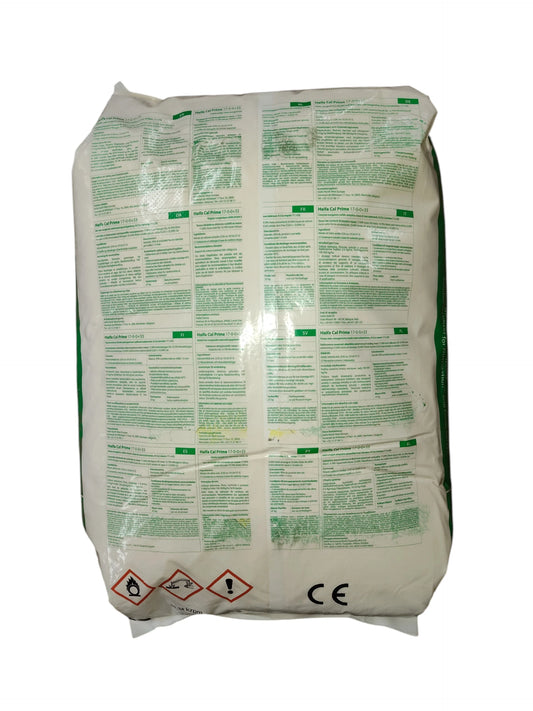
Haifa Cal Prime 17-0-0 is a highly soluble, fully water-soluble calcium nitrate formulated for fertigation and hydroponic use — an ideal starting point for increasing calcium concentration in your nutrient solution after the HPS-to-LED transition.
2. Salt Accumulation Risk Increases
Because plants are taking up less water relative to nutrients, ions can accumulate in the root zone more rapidly than under HPS. In substrate-based systems, this can cause substrate EC to rise significantly above feed EC over time, creating osmotic stress even when feed EC appears appropriate. More frequent leaching or a lower feed EC may be required to maintain root zone balance.
Practical EC Adjustment When Transitioning from HPS to LED
There is no universal EC adjustment factor for the HPS-to-LED transition — the correct adjustment depends on your crop, growth stage, substrate type, and environmental parameters. However, the following framework provides a starting point:
- Increase baseline EC by 10–20% when transitioning to LED at equivalent PPFD, to compensate for reduced transpiration-driven nutrient uptake — particularly for calcium and magnesium.
- Monitor drain EC closely in the first weeks after transition. If drain EC is rising faster than expected, reduce feed EC or increase drain fraction to prevent root zone salt accumulation.
- Increase irrigation frequency rather than volume where possible. Smaller, more frequent fertigation events maintain a more consistent root zone EC and prevent the wet/dry cycling that can concentrate salts between events.
- Prioritize calcium in your nutrient profile. Consider supplementing with a dedicated calcium source if tip burn or BER symptoms emerge post-transition, even at adequate EC levels.
- Recalibrate your VPD targets. Because leaf temperature is lower under LED, you may find that a slightly lower room VPD (0.8–1.0 kPa vs. 1.0–1.2 kPa under HPS) is needed to maintain equivalent stomatal activity and transpiration-driven nutrient uptake.
Tools for Precision Nutrient Solution Management: HydroBuddy
Adjusting EC in response to changing WUE is straightforward in principle, but getting the ionic ratios right across a full nutrient profile — especially when scaling concentration up or down — requires precise calculation. One of the most capable free tools available for this is HydroBuddy, developed by Daniel Fernandez at Science in Hydroponics.
HydroBuddy is a free, open-source hydroponic nutrient calculator that allows growers to:
- Formulate complete nutrient solutions from individual fertilizer salts, with full control over every macro and micronutrient ratio
- Calculate exact fertilizer weights for any target solution volume and EC
- Scale nutrient solution concentration up or down in response to changing WUE conditions — a feature directly relevant to the HPS-to-LED transition
- Model the ionic composition of your solution to ensure balanced nutrition at any EC level
- Account for water source chemistry by inputting your source water analysis, so the final solution reflects actual nutrient availability rather than theoretical targets
The WUE-adjustment functionality in HydroBuddy is particularly valuable for growers transitioning from HPS to LED. Rather than simply dialing up EC on your existing nutrient program — which proportionally increases all ions, including those that may already be adequate or excessive — HydroBuddy allows you to selectively increase calcium and magnesium concentrations while holding other nutrients constant, precisely targeting the mass-flow-dependent nutrients most affected by reduced transpiration.
For growers serious about precision nutrition in a high-WUE LED environment, HydroBuddy is an indispensable part of the toolkit. It is available as a free download at scienceinhydroponics.com.
Need a complete, professionally formulated base nutrient for your LED system? Peters Professional 14-0-8 Hydroponic Boost delivers a balanced macro profile engineered for high-performance hydroponic production — ready to dial in at any EC.
Shop Peters 14-0-8 Hydroponic Boost →
The Biostimulant Opportunity
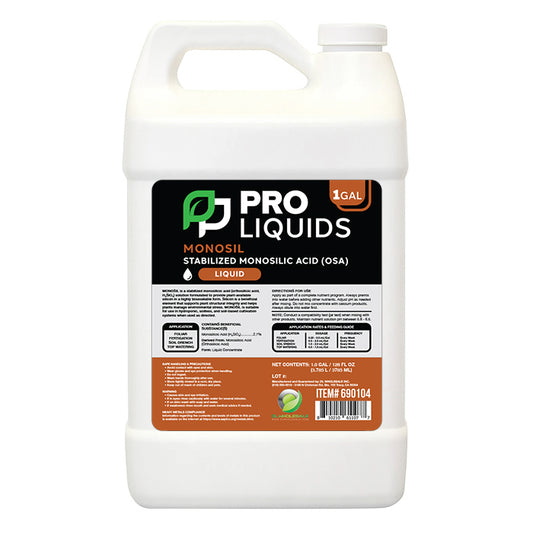
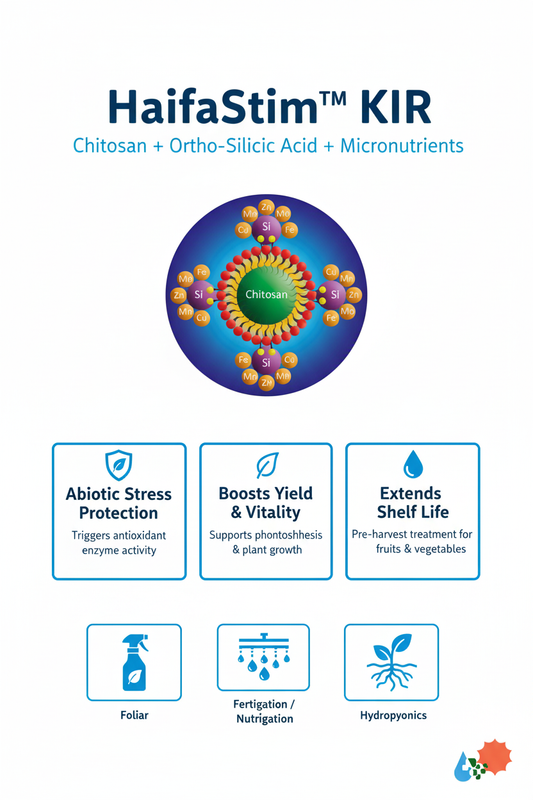
The high-WUE environment created by LED + CO₂ + controlled VPD is also an ideal context for biostimulant use. Ortho-silicic acid, for example, strengthens cell walls and improves stomatal regulation — supporting the plant's ability to manage the reduced but more precise water flux characteristic of LED production. Chitosan-based biostimulants activate stress response pathways that improve nutrient use efficiency, complementing the already-favorable WUE conditions of a well-managed LED environment.
We carry two biostimulants well-suited to high-WUE LED production:
- Pro Liquids MonoSil Monosilicic Acid — highly bioavailable ortho-silicic acid for cell wall strength and stomatal regulation
- HaifaStim™ KIR Biostimulant — potassium-based biostimulant to support stress resilience and nutrient use efficiency
Shop MonoSil → Shop HaifaStim KIR →
Conclusion
The transition from HPS to LED is not simply a lighting upgrade — it is a fundamental shift in plant physiology that requires a corresponding adjustment in nutrition management. The reduction in infrared radiation, lower leaf temperatures, and reduced transpiration that characterize LED production create a high-WUE environment that demands higher EC, more precise calcium management, and closer monitoring of root zone salt dynamics.
When you add CO₂ enrichment and controlled VPD to the equation, indoor LED production achieves a level of water use efficiency that is simply not possible under HPS or in field conditions under natural sunlight — regardless of how high the light intensity is. Growers who understand this relationship and adjust their nutrition programs accordingly — using tools like HydroBuddy to dial in the right ionic balance at the right concentration — will unlock the full agronomic potential of their LED investment — not just the energy savings on their electricity bill.
Ready to optimize your LED nutrition program?
Browse our full range of hydroponic fertilizers and biostimulants formulated for high-performance indoor production.