SenseCAP Custom Greenhouse Monitoring
Wireless Greenhouse Monitoring with SenseCAP LoRaWAN Sensors
Managing a commercial greenhouse means staying ahead of environmental variables that directly impact crop yield and quality. SenseCAP's LoRaWAN wireless sensor ecosystem gives growers real-time visibility into the conditions that matter most — soil moisture, substrate EC, temperature, humidity, CO2, and light — without complex wiring or expensive infrastructure.
Custom Hydro is an authorized distributor of SenseCAP sensors, gateways, and accessories. Whether you're running a hydroponic operation, a coco coir greenhouse, or a soil-based farm, SenseCAP has a sensor configuration for your setup.
What Is SenseCAP?
SenseCAP is an industrial-grade IoT sensor platform developed by Seeed Studio. It uses LoRaWAN (Long Range Wide Area Network) wireless protocol to transmit sensor data over distances up to 10 km line-of-sight — making it ideal for large greenhouse operations and outdoor field applications. Sensors are battery-powered, IP66 weatherproof, and configurable via the SenseCAP Mate mobile app over Bluetooth.
Data flows from sensors to a LoRaWAN gateway, then to the SenseCAP cloud dashboard or your own server via open APIs. The platform supports threshold-based alerts, historical trend analysis, and integration with third-party automation systems.
Key Parameters SenseCAP Monitors
- Soil Moisture (VWC) — Volumetric water content from 0–100%, critical for irrigation scheduling and preventing over- or under-watering
- Pore Water EC (pwEC) — Nutrient concentration available to plant roots, calculated via the Hilhorst method from bulk EC and VWC readings
- Bulk EC — Total substrate electrical conductivity, useful for detecting salt buildup and fertilizer accumulation
- Temperature — Root zone and air temperature from -40 to 80°C, affecting nutrient uptake and plant metabolism
- Humidity — Relative humidity for VPD management and disease prevention
- CO2 — Carbon dioxide concentration for photosynthesis optimization in sealed greenhouse environments
- Light Intensity — PAR and lux monitoring for supplemental lighting decisions
Why Pore Water EC Matters
Standard bulk EC measurements reflect the overall conductivity of the substrate — but what plants actually experience is the nutrient concentration in the water surrounding their roots, known as pore water EC (pwEC). The SenseCAP S-2108 calculates pwEC using the Hilhorst method, which accounts for substrate moisture content to deliver a more accurate picture of nutrient availability. This is especially valuable in rockwool, coco coir, and peat-based substrates where bulk EC can be misleading at low moisture levels.
SenseCAP Sensors Available at Custom Hydro
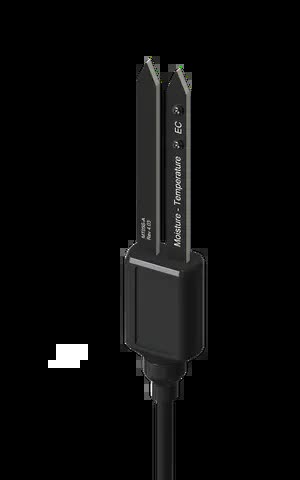
- SenseCAP S-2108 — Soil Moisture, Temperature & Pore Water EC (LoRaWAN) — ideal for substrate monitoring in hydroponic and greenhouse production
- SenseCAP S2103 — CO2, Air Temperature & Humidity — for sealed greenhouse environments and grow rooms
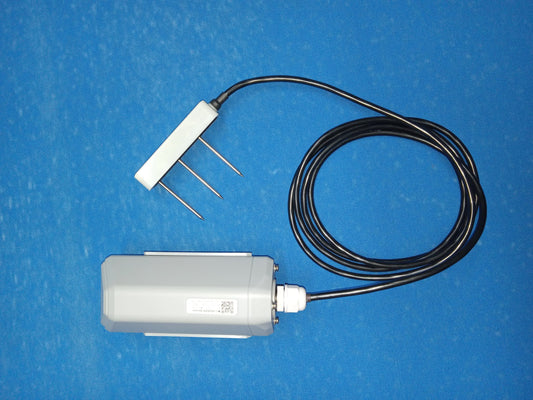
- SenseCAP S2105 — Soil Moisture, Temperature & EC — compact sensor for field and container applications
- SenseCAP S2106 — Fertilizer pH Sensor — monitor nutrient solution pH wirelessly in fertigation systems
- SenseCAP S2102 — Wireless Light Intensity Sensor — PAR and lux monitoring for supplemental lighting management
- SenseCAP S2120 — 8-in-1 Weather Station — wind speed/direction, rainfall, temperature, humidity, barometric pressure, light, and UV index
- SenseCAP S700 V2 — 7-in-1 Compact Weather Sensor — all-in-one outdoor environmental monitoring in a smaller form factor
LoRaWAN Gateways
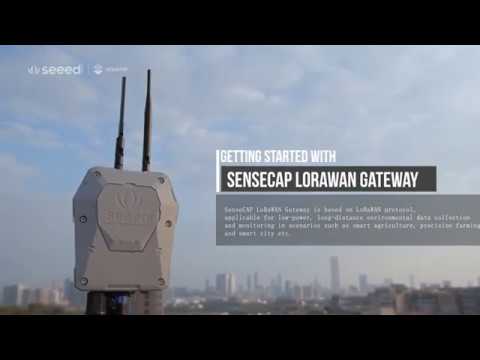
- SenseCAP Outdoor Gateway — LoRaWAN US915MHz, weatherproof, connects sensors to cloud or local server — ideal for greenhouse and field deployments
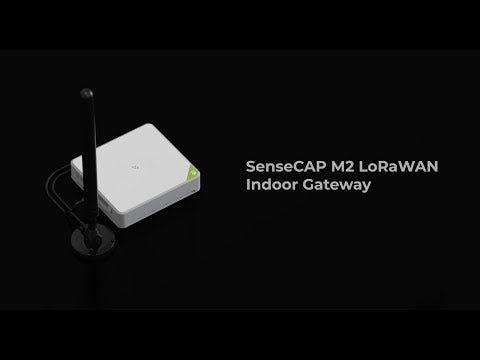
- SenseCAP M2 Indoor Gateway — Multi-platform LoRaWAN indoor gateway (SX1302), US915 — for office, headhouse, or indoor control room installation
Getting Started
Deploying SenseCAP in your greenhouse takes four steps:
- Select your sensors — choose based on the parameters you need to monitor (substrate, air, weather)
- Install a LoRaWAN gateway — one gateway covers most greenhouse operations; larger facilities may need two
- Configure via SenseCAP Mate app — Bluetooth pairing, measurement intervals, and network settings in minutes
- Monitor via dashboard or API — view real-time data, set threshold alerts, and export historical records
Who Is SenseCAP For?
SenseCAP is built for commercial and research-scale operations that need reliable, long-range wireless monitoring without the cost of hardwired sensor networks. It's well-suited for tomato, cucumber, pepper, specialty crop, berry, and ornamental greenhouse production, as well as outdoor precision agriculture and nursery operations.
Ready to build your monitoring system? Browse all SenseCAP sensors and gateways at Custom Hydro, or contact us for a custom sensor configuration recommendation.