The Expert's Guide to Custom Fertilizer Concentrates for Professional Horticulturalists
Why Custom Fertilizer Concentrates?
For commercial horticulture operations — cannabis, greenhouse vegetables, hydroponics — mixing your own fertilizer concentrates in-house offers significant advantages over purchasing pre-packaged fertilizers:
- Cost savings — Raw mineral inputs cost a fraction of pre-mixed retail fertilizers at commercial volumes. For a detailed analysis, see Daniel Fernandez’s cost analysis of fertilizers for hydroponic/soilless growing
- Precision nutrition — Dial in exact N-P-K and micronutrient ratios for your specific crop, growth stage, and water quality
- Maximum solubility — Technical-grade inputs dissolve completely, ensuring nutrients are fully available to plants with no residue in drip systems
- Flexibility — Adjust formulas on the fly as crop needs change across veg, bloom, and finishing stages
Before You Mix: Key Considerations
Crop Nutrient Requirements
Different crops and growth stages have different N-P-K and micronutrient demands. Research your target crop’s nutrient profile or consult an agronomist before formulating. Cannabis, tomatoes, cucumbers, and leafy greens all have distinct requirements across their growth cycles.
Fertilizer Compatibility
Not all fertilizers can be combined in concentrated stock solutions — incompatible combinations cause precipitation, cloudiness, and nutrient lockout. Always check compatibility before mixing. See our full guide: Fertilizer Concentrates and Compatibility

Solubility
High solubility is essential for fertigation systems — low-solubility inputs can clog drip emitters and leave residue in reservoirs. Check our Fertilizer Solubility Table before selecting inputs.
Water Quality
Source water pH, alkalinity, calcium, and magnesium levels all affect nutrient availability and solution stability. Test your water before formulating and adjust your recipe accordingly.
Essential Ingredients for Custom Fertilizer Concentrates
Macronutrients
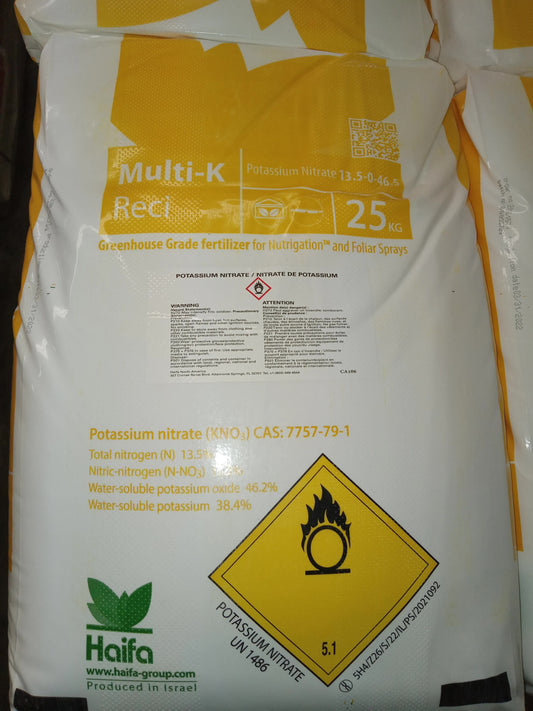
- Nitrogen (N) — Promotes vegetative growth and overall plant health. Sources: Calcium Nitrate, Potassium Nitrate
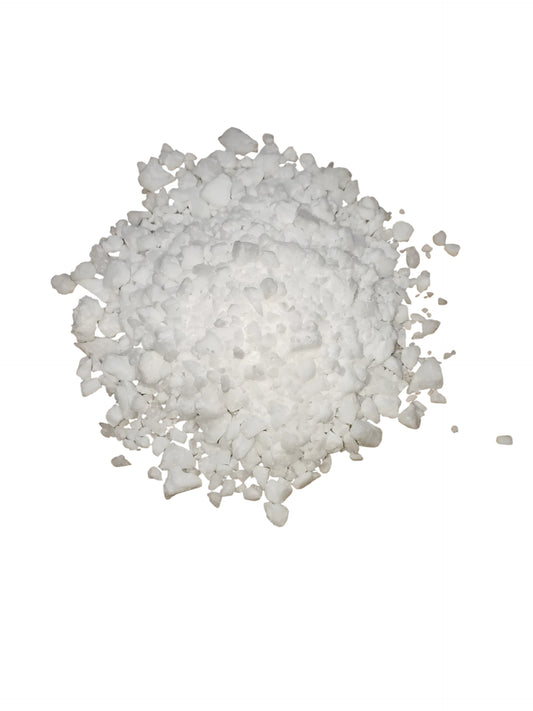
- Phosphorus (P) — Critical for root development, energy transfer, and flower initiation. Sources: Monopotassium Phosphate (MKP 0-52-34)
- Potassium (K) — Essential for flower/fruit development and plant resilience. Sources: Potassium Nitrate, Potassium Sulfate
- Calcium (Ca) — Cell wall strength, tip burn prevention. Source: Calcium Nitrate (always in a separate A tank from phosphate and sulfate)
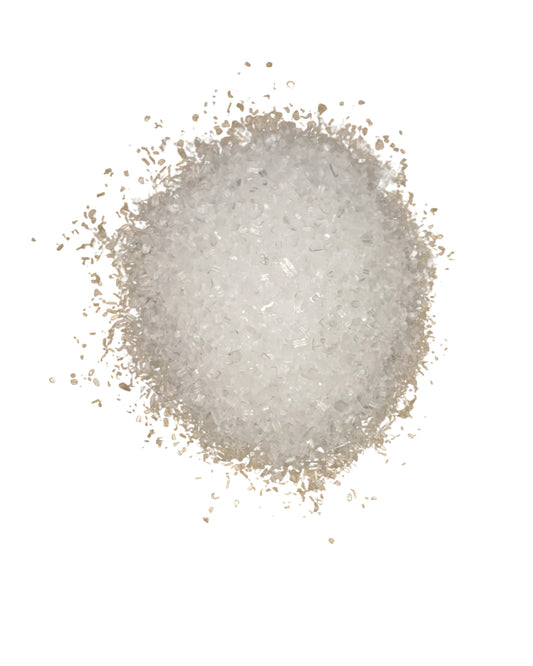
- Magnesium (Mg) — Chlorophyll production and enzyme activation. Source: Magnesium Sulfate (Epsom Salt)
Micronutrients
Required in smaller quantities but equally critical for plant health. Use chelated forms for maximum availability across a wide pH range: iron (Fe), manganese (Mn), zinc (Zn), copper (Cu), boron (B), and molybdenum (Mo). Browse our micronutrient chelates.
Mixing Techniques
- Separate A and B tanks — Calcium must always be kept in a separate stock tank from phosphates and sulfates to prevent precipitation. Use fertilizer injectors or Dosatron injectors to deliver each tank independently
- Start with water — Begin with a half-full tank of clean water before adding fertilizer inputs
- Add inputs one at a time — Dissolve each ingredient completely before adding the next to prevent precipitation
- Use chelated micronutrients — Chelation keeps micronutrients plant-available across a wider pH range
- Monitor pH and EC — Use a calibrated pH meter and EC meter; test your nutrient solution regularly and adjust as needed
- Wear PPE — Gloves, goggles, and a well-ventilated workspace are essential when handling concentrated fertilizer salts
Labeling & Storage
- Label all containers — Include formula name, ingredients, nutrient ratios, mix date, and dilution rate
- Use airtight, lightproof containers — Prevents microbiological contamination and nutrient degradation
- Store away from heat and sunlight — Temperature extremes degrade nutrient quality over time
- Keep out of reach of children and pets — Follow all safety guidelines on product labels
Monitoring & Adjusting Your Fertigation System
- Monitor plant health weekly — Yellowing, chlorosis, tip burn, or stunted growth indicate nutrient imbalances
- Test soil/tissue regularly — Tissue analysis is the most accurate way to assess actual nutrient uptake
- Track EC and pH at the root zone — Runoff EC and pH tell you what’s actually reaching the roots vs. what you’re applying
- Keep detailed records — Log nutrient ratios, application rates, EC, pH, and plant response for every crop cycle
- Consult agronomists — Expert guidance can significantly accelerate program optimization
FAQ
Can I mix any fertilizers together? No — always check compatibility first. Calcium cannot be combined with phosphates or sulfates in concentrated stock solutions. See our compatibility guide.
How do I know the right nutrient ratios for my crop? Research your crop’s published nutrient requirements or consult an agronomist. Ratios vary significantly by crop type and growth stage.
How do I know if my concentrates are working? Monitor plant health, test tissue and runoff EC/pH regularly, and compare against target ranges for your crop.
Do I need to be a professional to mix my own concentrates? No — with the right inputs, a basic understanding of compatibility, and proper equipment, any grower can build an effective custom program. Contact our team for guidance.