How to Choose the Right Micronutrient Chelate for Your Crop
Micronutrient deficiencies are among the most misdiagnosed problems in commercial CEA. The symptoms — interveinal chlorosis, stunted growth, poor fruit set, tip burn — overlap between elements and can mimic other issues entirely. But even when the deficient element is correctly identified, growers often reach for the wrong form of it.
Chelated micronutrients are not interchangeable. The chelating agent determines stability, pH range, plant availability, and application method compatibility. Choosing the wrong chelate for your system or crop stage means paying for a product that either locks up in your solution, degrades before uptake, or simply doesn't perform at your operating pH.
This guide covers the chelate chemistry you need to make informed purchasing decisions — by element, by chelate type, and by application method.
What Chelation Actually Does
A chelate is a molecule that binds a metal ion — iron, manganese, zinc, copper, calcium, magnesium — and holds it in a soluble, plant-available form. Without chelation, many micronutrients precipitate out of solution at typical hydroponic and fertigation pH ranges, forming insoluble compounds that roots cannot absorb.
The chelating agent wraps around the metal ion like a claw — from the Greek chele, meaning claw, and pronounced kee-late, not chee-late. It's a distinction worth knowing if you're ordering from a supplier who actually understands what they're selling. That claw-like bond protects the metal ion from reacting with other ions in solution, from oxidation, and from precipitation. When the plant root releases organic acids into the rhizosphere, the chelate releases the metal ion for uptake.
The strength of that bond — called stability constant — varies by chelating agent and by pH. This is the core variable that determines which chelate is right for your system.
The Four Main Chelating Agents
Most commercial chelated micronutrients use one of four chelating agents. Each has a distinct stability profile, pH range, and cost point.
EDTA (Ethylenediaminetetraacetic acid) is the most widely used chelating agent in commercial horticulture. It's cost-effective, highly water-soluble, and compatible with most nutrient programs. EDTA chelates are stable and effective in the pH range of 4.0–6.5, making them well-suited for most hydroponic and fertigation systems that operate in this range. Above pH 6.5, EDTA-chelated iron begins to lose stability and can precipitate — though EDTA chelates of manganese, zinc, and copper remain effective to higher pH levels. EDTA is the right default choice for most CEA operations running at pH 5.5–6.5.
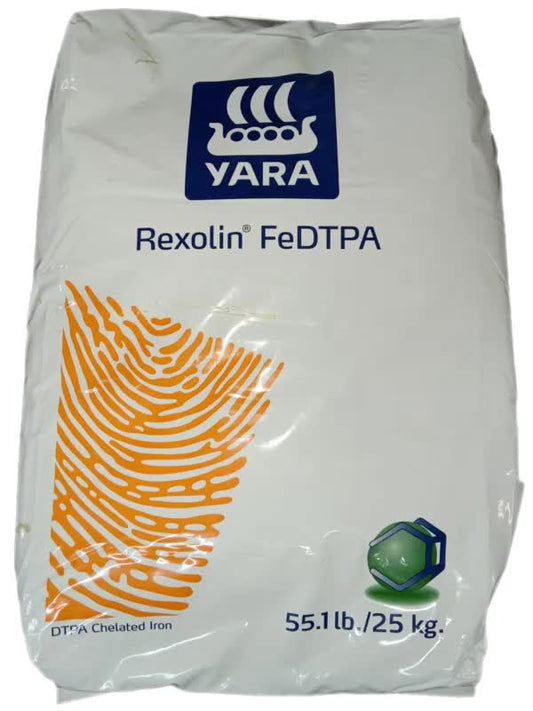
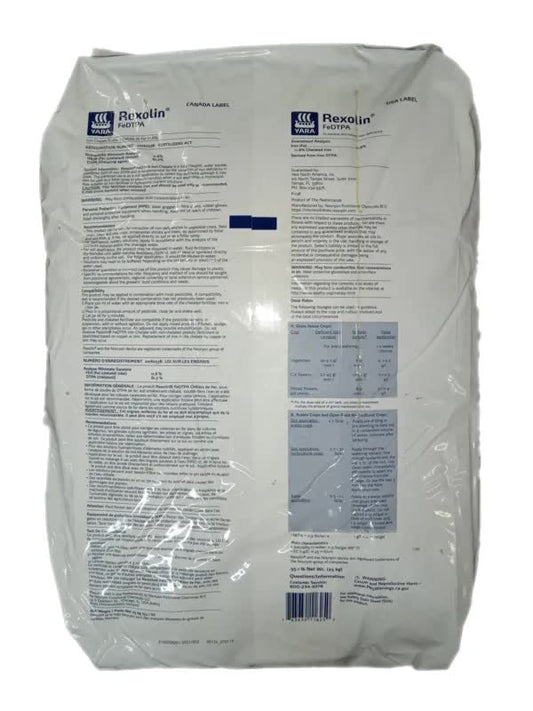
DTPA (Diethylenetriaminepentaacetic acid) is a stronger chelating agent than EDTA, with effective stability up to pH 7.5 for iron. This makes DTPA-chelated iron the preferred choice for operations running at higher pH — soil-based fertigation programs, alkaline water sources, or crops that perform best at pH 6.5–7.0. DTPA is more expensive than EDTA but justified when pH conditions would compromise EDTA-iron stability. For manganese, zinc, and copper, DTPA offers minimal advantage over EDTA in most CEA pH ranges.
EDDHA (Ethylenediamine-N,N'-bis(2-hydroxyphenylacetic acid)) is the most powerful synthetic chelating agent available for iron. EDDHA-chelated iron remains stable across the full pH range of 4.0–10.0, making it the only reliable iron source for high-pH systems, calcareous soils, and situations where iron deficiency persists despite EDTA or DTPA applications. EDDHA is significantly more expensive than EDTA or DTPA and is typically used as a corrective treatment or in systems where pH cannot be adequately controlled. It is not commonly used for manganese, zinc, or copper — its primary application is iron.
Amino acid chelates represent a different approach — instead of synthetic chelating agents, metal ions are bound to amino acids derived from hydrolyzed plant or animal proteins. Amino acid chelates are absorbed through a different uptake pathway than synthetic chelates, making them particularly effective for foliar applications where rapid absorption through leaf tissue is the goal. They are fully biodegradable, compatible with organic production programs, and effective across a wide pH range. The trade-off is cost — amino acid chelates are typically the most expensive option per unit of elemental nutrient.
Chelate Selection by Element
Iron (Fe)
Iron is the micronutrient most commonly deficient in hydroponic and high-pH fertigation systems, and it has the most complex chelate chemistry of any element. The right iron chelate depends almost entirely on your system pH:
- pH 4.0–6.5: EDTA-chelated iron (13% Fe) is the standard choice — cost-effective, highly soluble, and fully stable in this range.
- pH 6.0–7.5: DTPA-chelated iron (10–11% Fe) is the preferred option. Products like Sprint 330, Rexolin 11% DTPA, Brandt Sequestar 11% DTPA, and Haifa Micro DTPA 11% all perform reliably in this range.
- pH 7.0+, persistent deficiency, or calcareous conditions: EDDHA-chelated iron (6% Fe) is the only synthetic chelate with sufficient stability. Sprint 138 and Iron EDDHA are proven options for high-pH correction.
- Foliar applications or organic programs: Metalosate Iron amino acid chelate provides rapid foliar absorption and is OMRI-compatible.
If iron deficiency persists in your system despite correct chelate selection, check pH at the root zone — not just at the reservoir. Localized pH elevation at the root surface is a common cause of iron lockout even when reservoir pH appears correct.
Manganese (Mn)
Manganese deficiency presents as interveinal chlorosis on young leaves, often confused with iron deficiency. The key distinction: iron deficiency affects the youngest leaves first and most severely; manganese deficiency typically shows on slightly older tissue.
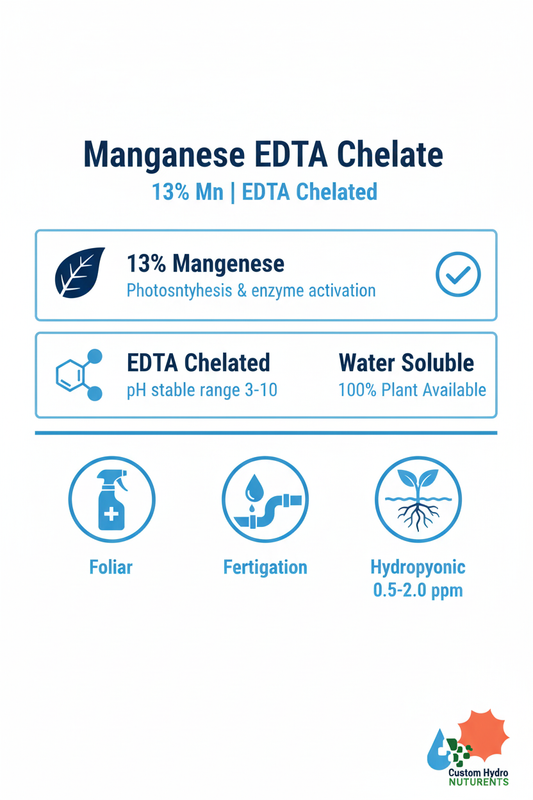
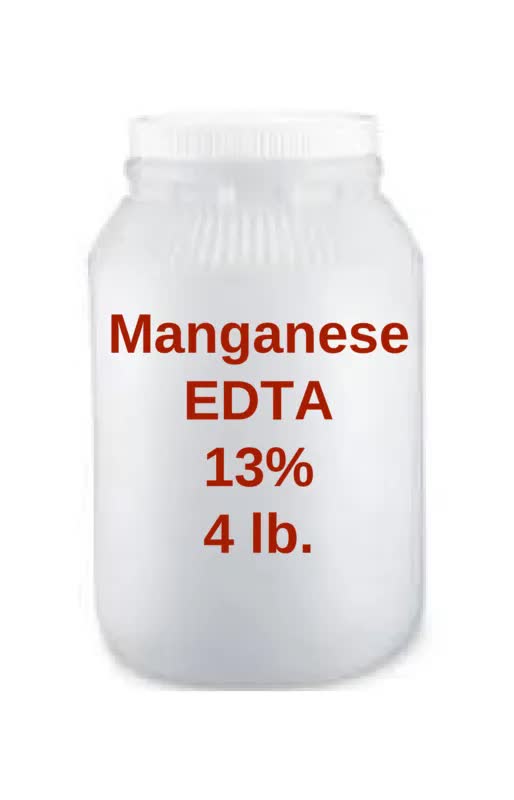
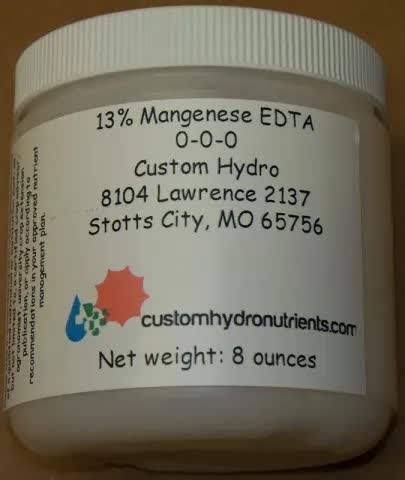
EDTA is the standard chelating agent for manganese across all CEA pH ranges. Manganese EDTA (13% Mn) is stable and effective from pH 4.0–7.0, covering the full operating range of most hydroponic and fertigation systems. For bulk applications, Dissolvine Manganese EDTA 13% (55 lb.) offers the best cost-per-unit for commercial scale. The Sequestar 13% Mn EDTA Microgranule is an excellent option for precision blending and custom mix formulations.
Zinc (Zn)
Zinc deficiency causes stunted internodes, small distorted leaves, and reduced shoot growth. It's most common in high-pH systems and in crops with high zinc demand during reproductive stages.
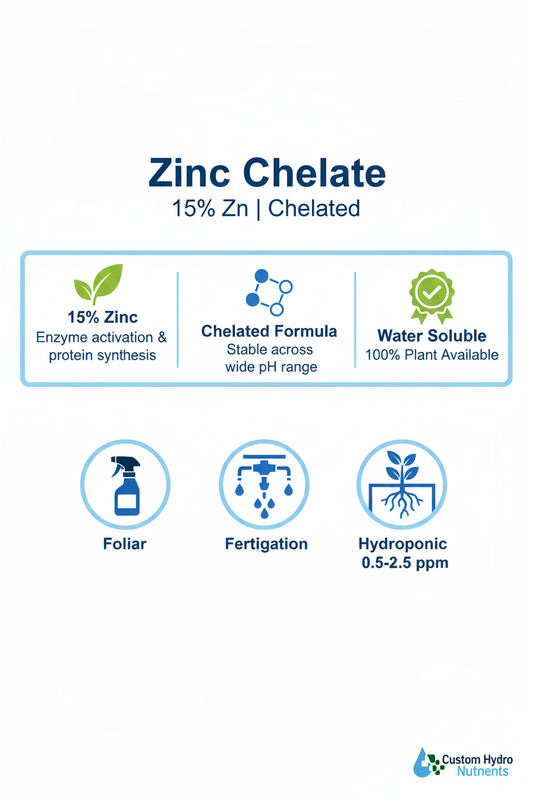
Like manganese, zinc is well-served by EDTA chelation across typical CEA pH ranges. Zinc EDTA (15% Zn) is stable to pH 7.0 and is the standard choice for hydroponic and fertigation programs. The Brandt Sequestar 14% Zinc EDTA Microgranule is well-suited for precision blending into custom nutrient programs.
Copper (Cu)
Copper deficiency is less common than iron, manganese, or zinc deficiency in CEA, but it does occur — particularly in systems with very high phosphorus levels, which can antagonize copper uptake. Symptoms include wilting of young shoots, bluish-green leaf color, and poor lignification.
Copper has a high affinity for EDTA and remains well-chelated across a wide pH range. Copper EDTA (15% Cu) is the standard choice for corrective and maintenance applications. The Brandt Sequestar 14% Copper EDTA Microgranule is available for precision blending. Use copper with care — it has a narrow margin between deficiency and toxicity, and excess copper is phytotoxic and persistent in recirculating systems.
Calcium (Ca) and Magnesium (Mg)
Calcium and magnesium are macronutrients supplied in large quantities through base fertilizers, but chelated forms serve a specific role: foliar correction and situations where antagonism or lockout prevents adequate uptake through the root zone.
Calcium EDTA (9.7% Ca) is used primarily for foliar applications to correct tip burn, blossom end rot, and calcium-related fruit quality issues — conditions where root-zone calcium is adequate but translocation to rapidly growing tissue is insufficient. Magnesium EDTA (6% Mg) serves a similar role for foliar magnesium correction, particularly in high-potassium programs where K-Mg antagonism limits magnesium uptake. For organic programs, Metalosate Magnesium amino acid chelate provides rapid foliar absorption.
Complete Micronutrient Programs: Mixes vs. Individual Elements
For operations building a complete micronutrient program from scratch, or those looking to simplify their input inventory, chelated micronutrient mixes offer a practical alternative to managing individual elements separately.
The Chelated Micronutrient Mix provides a balanced blend of chelated Fe, Mn, Zn, Cu, B, and Mo in a single product — suitable for general-purpose hydroponic and fertigation programs where individual element correction isn't required. For liquid programs, the Chelated Liquid Soluble Trace Element Mix and Peters Liquid S.T.E.M. provide ready-to-use chelated micronutrient solutions compatible with injection systems and foliar programs.
For operations with specific crop requirements or unusual water chemistry, a Custom Micronutrient Formulation allows you to specify element ratios, chelate types, and concentration levels matched to your exact program.
Application Method Considerations
Hydroponic reservoir. EDTA and DTPA chelates are the standard choice for reservoir applications. Ensure complete dissolution before adding to the reservoir — dissolve in a small volume of water first, then add to the tank. Avoid mixing concentrated chelate solutions directly with concentrated phosphate or sulfate solutions, which can cause precipitation before dilution.
Fertigation injection. Chelated micronutrients are compatible with most fertigation injection systems. For high-volume injection, DTPA chelates offer better stability across the pH fluctuations common in recirculating fertigation systems. Microgranule formulations dissolve cleanly and are well-suited for stock tank preparation.
Foliar application. Amino acid chelates (Metalosate) are the preferred choice for foliar applications due to their rapid absorption through leaf cuticle and stomata. Synthetic chelates (EDTA, DTPA) can be used foliar but absorb more slowly. Apply foliar sprays during early morning or evening to minimize evaporation and maximize absorption time. Avoid foliar application in direct sunlight or when temperatures exceed 85°F.
A Practical Decision Framework
Before selecting a chelated micronutrient product, work through these four questions:
- What is your system pH? This is the single most important variable. Below 6.5, EDTA works for all elements. Between 6.5 and 7.5, use DTPA for iron. Above 7.5 or for persistent iron deficiency, use EDDHA.
- Is this a corrective or maintenance application? Corrective applications for acute deficiency may require higher rates and faster-acting forms (foliar amino acid chelates). Maintenance applications through the reservoir or fertigation system can use standard EDTA or DTPA products.
- What is your application method? Foliar correction favors amino acid chelates. Reservoir and fertigation applications favor EDTA or DTPA depending on pH.
- What is your production scale? At commercial scale, bulk sizing (20 lb., 55 lb.) significantly reduces cost per unit of elemental nutrient. Factor this into your product selection, especially for high-use elements like iron and manganese.
The Bottom Line
Chelate selection is not a detail — it's a fundamental input decision that determines whether your micronutrient program actually works at your operating pH. The right chelate for a pH 5.8 NFT lettuce system is not the same as the right chelate for a pH 7.0 drip-irrigated tomato program, even if the deficient element is identical.
Know your pH. Know your application method. Match the chelate to both. If you're unsure which product is right for your specific situation, contact us with your water analysis and system parameters and we'll point you in the right direction.