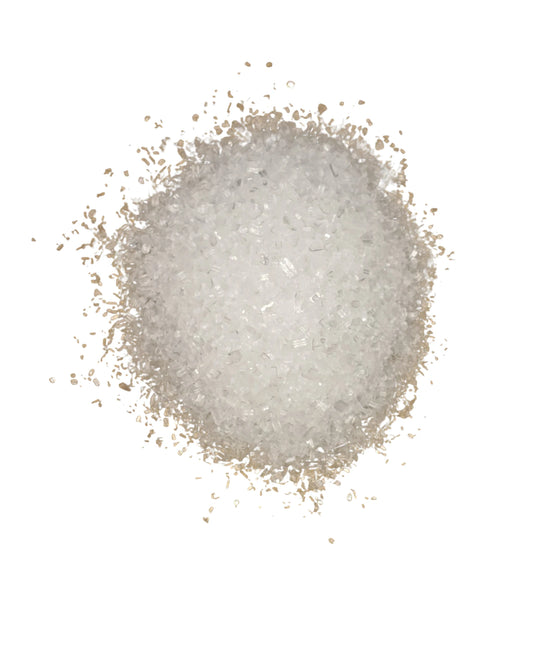
Hydroponic Tomato Nutrients: MasterBlend Mixing, EC and Feeding
A hydroponic tomato feeding program starts with source-water chemistry, a complete nutrient plan and consistent irrigation. This guide explains how to use a crop-specific base fertilizer, interpret EC and ppm readings, and adjust feeding without treating one recipe as a universal prescription.
Choose a base for ongoing tomato production
MasterBlend 4-18-38 Tomato Formula, 25 lb is a water-soluble base for tomatoes and other fruiting vegetables. The 25 lb bag suits repeated mixing and ongoing production. It contains Tomato Formula only, not a complete three-part kit.
Review YaraLiva CalciNit 15.5-0-0 and Magriculture magnesium sulfate heptahydrate as separately purchased companion inputs. The base contains micronutrients; do not automatically add a separate trace-element blend without accounting for the nutrients already supplied.
Follow the manufacturer’s mixing chart
The MasterBlend 4-18-38 mixing chart provides quantities for different final volumes in gallons and litres. Use the chart for all three components rather than approximating a weighed dose with a scoop.
- Dissolve the appropriate quantity of Tomato Formula in water.
- Add the specified magnesium sulfate and dissolve completely.
- Add the specified calcium nitrate and dissolve completely.
The chart calls for half rates during initial growth until seedlings are established. Follow the applicable label and chart, then measure the resulting EC and pH. The same recipe does not guarantee identical readings in different source waters. Do not automatically transfer this recipe to the different Lettuce or Bloom analyses.
Test source water before designing the feed
Begin with laboratory analysis of alkalinity, EC and individual mineral concentrations. Source water may supply calcium and magnesium as well as ions that accumulate during recirculation. Account for these contributions when choosing fertilizer quantities.
Alkalinity and pH are different measurements. A pH reading describes the sample at measurement; alkalinity helps explain its resistance to acidification. Base any water-treatment plan on the analysis rather than copying a fixed acid dose from another operation.
Understand EC, meter ppm and elemental concentrations
EC indicates the combined conductivity of dissolved ions. It cannot confirm that each nutrient is present at the intended concentration. A meter’s converted ppm reading is an estimate based on conductivity, not a laboratory measurement of nitrogen, calcium or another individual element.
Laboratory mg/L results describe individual nutrient concentrations. Conversions from mmol/L or micromoles per litre depend on the element and reporting basis. Check whether a nitrogen result means elemental nitrogen or nitrate before comparing it with a target.
Distinguish fresh feed, recirculating reservoir, drain and substrate-extract samples. Record the sample location, method and units with every reading. Root-zone or soil-extract targets should not be treated as direct fertilizer-mixing instructions.
Adjust through the crop cycle
Establishment: Use the manufacturer’s reduced-rate guidance and evaluate plant establishment before increasing concentration.
Vegetative growth: Record solution preparation, water additions, irrigation and EC/pH trends. Check that irrigation reaches the root zone consistently.
Flowering and fruiting: Review the complete nutrient program rather than adding potassium, calcium, iron or boron independently from an isolated table. Use crop observations and appropriate solution, substrate or tissue analysis to investigate an imbalance.
Late production: Base changes on remaining growth, water demand and test results. A different bloom analysis is not a gram-for-gram substitute for 4-18-38.
Investigate blossom-end rot before adding more fertilizer
Blossom-end rot warrants a review of both calcium supply and delivery. Penn State identifies under-fertilization, nutrient imbalance, low pH, moisture management, high temperature and airflow among factors associated with calcium-deficiency symptoms. Water movement and competition between leaves and fruit also affect calcium delivery.
Check irrigation consistency, root-zone conditions, environmental records and nutrient analysis before changing the feed. An extra calcium-magnesium supplement changes the overall formulation and should not be added automatically.
Manage the system, not just the recipe
Track water and nutrient additions separately in recirculating systems. A stable EC does not prove that individual nutrient proportions remain balanced. In substrate systems, compare feed and root-zone or drain results using a consistent sampling procedure.
Base solution replacement and irrigation decisions on the system, water quality, crop demand and monitoring results rather than a universal calendar interval.
Choose the right package size
For ongoing production, review the 25 lb Tomato Formula bag and its separately purchased companion inputs. For smaller batches, choose the 1 lb size or 4 lb size. Compare MasterBlend formulas and sizes when planning another crop or feeding program.